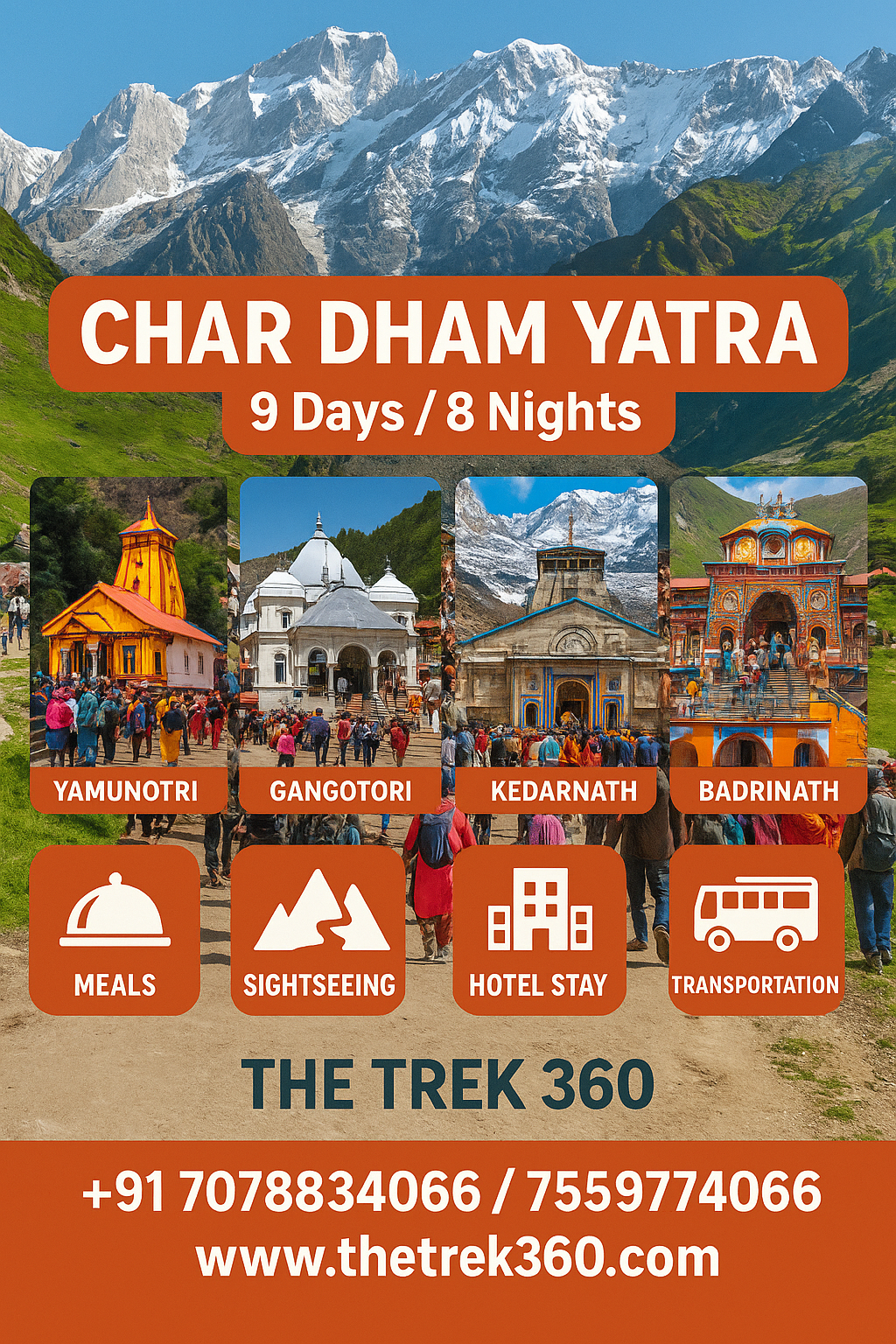
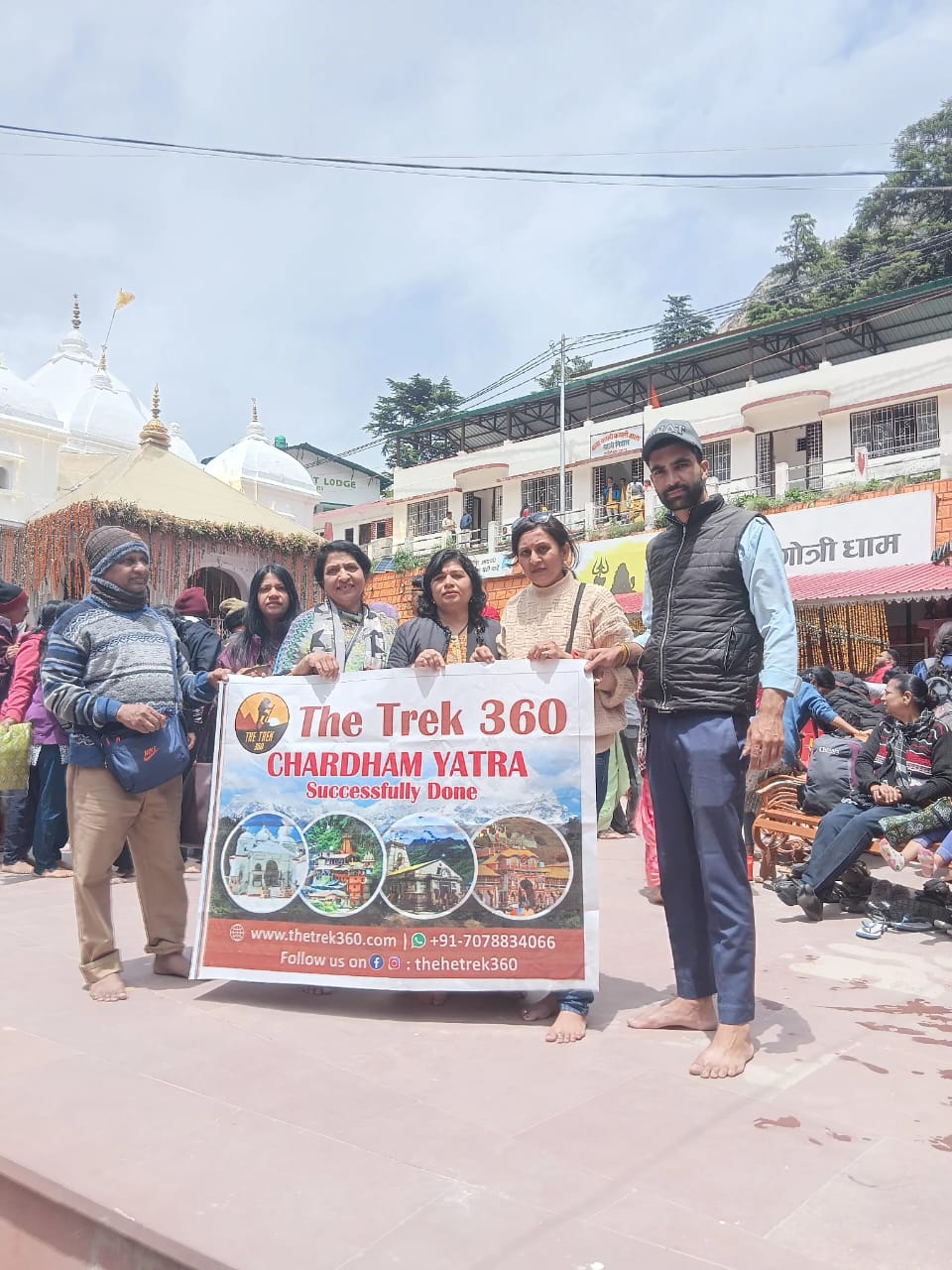
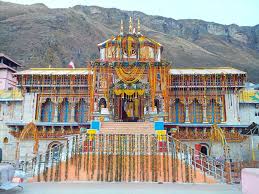
The Char Dham Yatra is one of the most important spiritual journeys for Hindu devotees. This 9 Days / 8 Nights itinerary covers the four holy temples of Uttarakhand — Yamunotri, Gangotri, Kedarnath, and Badrinath — which are located deep in the Himalayan mountains. These temples are believed to be the homes of major deities and visiting them is said to bring purity, peace, and moksha (spiritual liberation).
Important Details
- Registration: Carry your Char Dham Yatra registration printout.
- ID Proof: Keep a valid government ID with you.
- Health: Not suitable for people with major heart or breathing issues.
- Weather: Very cold in mountains; carry warm clothes.
- Roads: Mountain roads may have delays or traffic.
- Trekking: Yamunotri, Kedarnath, and Tungnath require trekking.
- Extra Services: Helicopter, pony, palki are not included.
- Food: Only vegetarian meals are available.
- Network: Mobile network is weak; Jio works best.
- Hotels: Basic but clean mountain hotels; hot water may be limited.
- Timings: Most days start early in the morning.
- Safety: Stay with the group; don’t wander alone.
- Hydration: Drink enough water during the trip.
- Delays: Weather may cause changes in the schedule.
Cultural Significance
The Char Dham Yatra is not only a spiritual journey — it is a window into the ancient Himalayan culture. Uttarakhand is home to the Garhwali community, whose traditions are more than 1,000 years old. The songs, dances, and rituals performed in the villages along the Yatra route have been passed down from generation to generation.
Villages like Mana (India’s Last Village) still follow old customs such as traditional wool weaving and wood carving. The houses built from stone and deodar wood show the unique Himalayan architecture that has existed for centuries. Even today, locals welcome pilgrims with warm Garhwali hospitality, which is a deep part of their culture.
Cultural events such as Pandav Nritya, Bhotiya dance, and local temple festivals happen in many parts of the route, especially during the peak Yatra season. These traditions reflect the rich lifestyle of the people living in some of India’s toughest geographic regions.
Food traditions are simple but historic — the famous Mandua ki Roti, Gahat Dal, and Pahadi aloo have been eaten by locals long before roads and hotels ever existed. The cultural vibe of Char Dham is so strong that the entire route feels like a living museum of Himalayan heritage.
Religious Significance
The Char Dham Yatra is considered one of the most sacred journeys in Hinduism. Millions of people believe that visiting these four temples leads to moksha (spiritual liberation). The Yatra is more than 1,200 years old, and references to all four temples appear in the Skanda Purana, Vishnu Purana, and Mahabharata, proving its ancient importance.
Yamunotri represents Goddess Yamuna, who is believed to be the daughter of Surya Dev. A lesser-known fact is that the natural hot spring at Yamunotri, Surya Kund, reaches temperatures as high as 85–95°C, and people have been boiling prasad in it for hundreds of years.
Gangotri marks the descent of River Ganga to Earth, which happened after King Bhagirath’s thousands of years of tapasya. This is why the river is also called Bhagirathi at its source. The Gangotri Temple was built in the 18th century by Amar Singh Thapa, a Gurkha general.
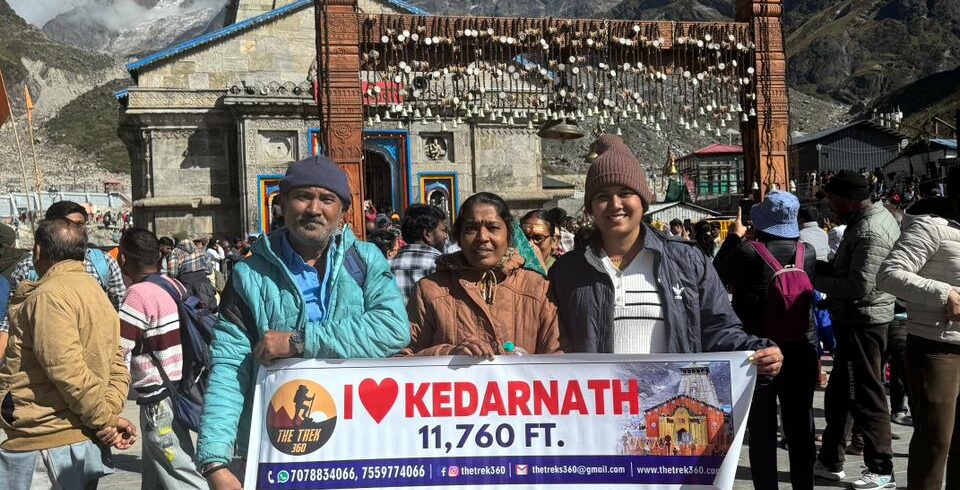
Kedarnath is one of the 12 Jyotirlingas, and legends say the Pandavas came here seeking forgiveness after the Mahabharata. The temple is built from massive stone blocks weighing over 6 tons each, placed without cement — a mystery even for modern engineers.
Badrinath is one of the most important temples of Lord Vishnu. A surprising fact is that the Badrinath idol (murti) was lost for years and later rediscovered in the Alaknanda River by Adi Shankaracharya in the 8th century. The village around the temple closes every winter, and even the murti is shifted to Joshimath because the entire area gets covered in heavy snow.
These facts, stories, and rituals make the Char Dham Yatra not only a religious trip but also a journey into India’s oldest spiritual roots.
Historical Significance
The Char Dham Yatra dates back to the 8th century, when Adi Shankaracharya established Badrinath Temple as a major pilgrimage site to revive Hindu dharma across India. Historical records show that pilgrims have been walking these Himalayan routes for over a thousand years, making it one of the oldest active pilgrimage circuits in the world.
Many of the towns on the Char Dham route — like Joshimath (founded in the 7th century), Uttarkashi, and Guptkashi — grew mainly because of pilgrim movement. Even today, you can still find ancient rest houses (dharamshalas) built by early kings and merchants to support travelers.
The Kedarnath Temple, built from massive stone blocks at 11,700 ft, is believed to be over 1,200 years old, and it survived the 2013 Uttarakhand floods with minimal damage, a fact that amazed scientists and historians. The temple’s architecture is designed to withstand extreme Himalayan weather, making it one of India’s strongest stone structures.
Mythological Significance
Each Dham is part of powerful stories from Hindu mythology. Yamunotri is linked to Goddess Yamuna, the daughter of Surya Dev. Legends say that taking a dip in Yamuna protects against painful death, which is why millions worship her every year.
Gangotri is where River Ganga descended after King Bhagirath’s tapasya. It is said that Ganga’s force was so strong that Lord Shiva had to hold her in his matted hair to reduce the impact, which is why the river is considered purifier of sins.
Kedarnath is connected to the Pandavas, who came here seeking forgiveness after the Mahabharata war. Lord Shiva appeared as a bull and later as a Jyotirlinga, making this temple one of the most sacred places for Shiva devotees.
Badrinath is believed to be where Lord Vishnu meditated while Goddess Lakshmi protected him from harsh weather by becoming a Badri tree. The temple is mentioned in both the Vishnu Purana and Skanda Purana, proving its ancient importance.
Nearby places like Mana Village (India’s last village), Bhim Pul, Saraswati River, Vyas Gufa, and Ganesh Gufa are directly tied to characters from the Mahabharata, making the entire region a living museum of mythology.
Socio-Cultural Impact
The Char Dham Yatra attracts 50–60 lakh (5–6 million) pilgrims every year, making it one of India’s largest spiritual movements. The Yatra season directly supports more than 3 lakh (300,000+) local people, including drivers, porters, hoteliers, shopkeepers, guides, pony owners, and temple workers.
This pilgrimage also protects and promotes the culture of Uttarakhand. Traditional Garhwali music, folk dances (like Pandav Nritya), ancient festivals, and wooden handicrafts thrive during the Yatra season. Many villages earn over 70% of their yearly income from pilgrims visiting Char Dham.
The Yatra also boosts infrastructure. New roads, bridges, homestays, and medical facilities have been built over the years, improving the quality of life for local communities. Pilgrims from every part of India travel here, creating unity, cultural exchange, and social bonding across regions.
Best Time to Visit Char Dham Yatra
April to June: This is the most popular time for the yatra. The weather is pleasant, roads stay clear, and all temples remain easily accessible.
May & June: Best months for families and senior citizens because the days are warm and comfortable for travel.
September to October: Ideal for people who prefer peaceful travel with less crowd. The skies stay clear and the mountain views are beautiful.
Post-Monsoon Season (September): Roads open fully after rains, and the surroundings look fresh and green.
October: A good month for calm darshan and smooth travel before the winter season begins.
Avoid Monsoon (July & August): Heavy rain can cause landslides, roadblocks, and delays, so yatra is not recommended.
Avoid Late Winter (November to March): All Char Dham temples close due to heavy snowfall.
Early Morning Hours: Best time for darshan at every dham for a peaceful and spiritual experience.
Weekend Avoidance: Weekends and holidays may have more crowd; weekday travel is smoother.
Plan With The Trek 360: Our team helps you choose the right weather window for safe and comfortable travel.
Overview
This trip begins from Haridwar, one of India’s oldest pilgrimage cities. From here, the journey passes through beautiful places like Mussoorie, Barkot, Uttarkashi, Guptkashi, Chopta, and Joshimath. Each day you travel through valleys, forests, high mountains, and rivers that hold great mythological value.
At Yamunotri, you visit the birthplace of River Yamuna. At Gangotri, you see the origin of River Ganga, also called Bhagirathi at its source. At Kedarnath, you trek to one of the 12 Jyotirlingas of Lord Shiva, located at 11,750 feet. At Badrinath, you worship Lord Vishnu in one of the most important temples of India.
Along the way, you also explore natural hot springs, peaceful riverbanks, ancient temples, local culture, Himalayan villages, and snow-covered peaks. Every location has a story from the Ramayana, Mahabharata, and other sacred texts, making the journey spiritually and historically rich.
The Yatra requires driving on mountain roads and some trekking, but it is made comfortable with well-planned routes, clean hotels, vegetarian meals, and full support from The Trek 360 team. The entire journey is designed to give travelers a balance of devotion, nature, adventure, and comfort.
Whether you are seeking blessings, fulfilling a lifelong dream, or exploring the Himalayan spiritual route, this Char Dham Yatra offers a complete and unforgettable experience for every pilgrim.
Highlights
- Complete Char Dham Circuit: Visit all four sacred temples — Yamunotri, Gangotri, Kedarnath, and Badrinath — in one single journey.
- Holy River Origins: Witness the birthplaces of the Yamuna and Ganga rivers, two of the holiest rivers in India.
- Kedarnath Trek Experience: Enjoy a memorable 16 km trek to the famous Kedarnath Temple, one of the 12 Jyotirlingas of Lord Shiva.
- Badrinath Darshan: Seek the blessings of Lord Vishnu at one of the most important temples in the country.
- Scenic Mountain Drives: Travel through beautiful valleys, forests, waterfalls, and snow-covered Himalayan peaks.
- Spiritual Bathing: Take holy dips at Tapt Kund, Gangnani Hot Spring, Bhagirathi River, and Yamuna River (as per location).
- Cultural Experiences: Visit ancient temples, local villages, sacred caves, and mythological places like Mana and Vyas Gufa.
- Chopta Visit: Explore Chopta, also called “Mini Switzerland,” known for its beautiful meadows and peaceful surroundings.
- Tungnath Temple Trek: Trek to the world’s highest Shiva temple at 3,680 meters, with an optional climb to Chandrashila peak. The trek timing depends on the schedule. If required, we will start early in the morning around 3:00 AM.
- Comfortable Travel: Enjoy clean hotels, vegetarian meals, safe transportation, and full assistance throughout the journey with The Trek 360.