Trip Info
-
Volvo transfer included.
-
5,640 m (Umling La)
-
Triple-sharing stay included
-
Manali
-
Srinagar
-
June to September
-
Moderate fitness recommended
-
Group-led expedition with an experienced group leader
-
High-Altitude Motorcycle Expedition
-
Breakfast and dinner included

Overview
Manali–Srinagar Ladakh Ride, 11 Days
Eleven days. Two states. Some of the highest roads on the planet.
This ride starts in Manali and ends in Srinagar, and in between it takes you through the toughest, most beautiful stretch of road India has to offer. Sarchu. Leh. Nubra Valley. Pangong. Hanle. Tso Moriri. Kargil. Then down into Srinagar.
You’ll cross Khardung La and Umling La — yes, the same Umling La that sits above 19,000 feet. Expect cold mornings, thin air, long silent stretches of nothing but mountains, and then suddenly a lake so blue it looks fake. Old monasteries tucked into cliffs. Villages where maybe thirty families live. If you’re lucky, wild yaks or a Himalayan fox crossing the road ahead of you.
None of this works without proper backup, though. High altitude isn’t forgiving, so the trip runs with a support and luggage vehicle, a mechanic on call, a group leader who knows the route, and an oxygen cylinder in case someone struggles with the altitude. You ride a Royal Enfield Himalayan 411 — fuel included as per the plan. Stays, meals, permits, first aid, riding gear — all sorted before you even land in Manali.
It’s not a joyride. It’s cold, it’s long, and some days will wear you out. But by the time you roll into Srinagar with the Dal Lake in front of you, you’ll understand why people call this the ultimate motorcycle trip in India.
Highlights
- You'll be riding some of the highest roads in the world on this one.
- Two big ones on the list, Khardung La and Umling La. Umling La goes past 19,000 ft, so yes it's cold up there even in June.
- Nubra Valley and Hunder come next, sand dunes in the middle of the mountains, camels included.
- Then Pangong Lake. The colour of the water keeps changing through the day and photos genuinely don't do it justice.
- Hanle is out there too, way off the main road, and it has India's highest observatory. Skies at night are something else.
- Tso Moriri if you want a quieter lake without the crowd Pangong gets.
- Along the way there are monasteries, small villages, people going about regular life at 13,000 feet.
- Lamayuru looks like the moon, Magnetic Hill plays its trick on cars, and the Zanskar meets the Indus nearby.
- A stop at Kargil War Memorial as well.
- Bike for the trip is the Royal Enfield Himalayan 411cc.
- Mechanic, backup vehicle, luggage vehicle, all travelling with the group the whole time.
- Permits, hotels, food, first aid, oxygen cylinder, sorted already.
Cultural Significance
Buddhism runs deep in Ladakh, and this trip touches quite a bit of it along the way. Diskit Monastery in Nubra Valley is one of the first — perched above the valley, hard to miss.
In Hanle, there’s Hanle Monastery, and if permissions work out, a look at the observatory too — an odd but fitting combination of old faith and modern science sitting in the same remote village.
Closer to Leh, Thiksey Monastery is worth the stop, and Lamayuru pairs its monastery with some of the strangest, moon-like terrain you’ll see on the entire trip. Pathar Sahib Gurudwara shows up too, a reminder that Ladakh’s religious history isn’t just Buddhist.
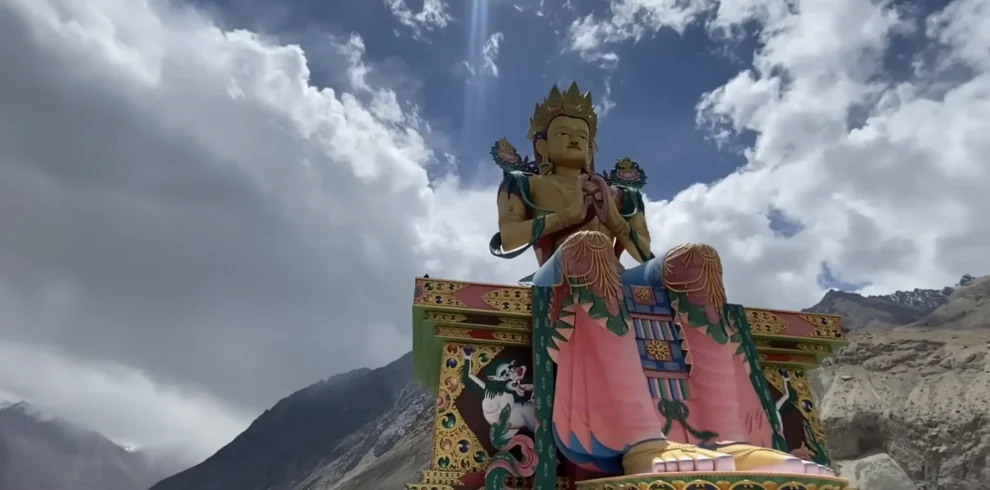
Then there’s the harder history — Rezang La and Kargil War Memorials, both tied to soldiers who fought and died defending this stretch of land. And at Mulbekh, a massive rock-cut Chamba statue of Maitreya Buddha has been standing there for centuries, worth getting off the bike for.
By the end of it, you’ll have seen a side of Ladakh that has nothing to do with altitude or adrenaline — old monasteries, quiet shrines, war memorials — and somehow it fits just as naturally into the trip as the passes do.
Religious Significance
Religion shows up in bits and pieces throughout this route, mostly Buddhist, with one Sikh stop thrown in. It’s never the main event of any given day, but it adds something to nearly every stretch of riding.
Diskit Monastery is the first one, tucked between the Khardung La descent and the run into Hunder on Day 4; a good excuse to get off the bike right after one of the hardest climbs of the trip. Hanle Monastery comes on Day 7, and if permits line up, the observatory too, which makes for a strange pairing: an old monastery and a modern telescope sharing the same quiet village.
On the way back from Tso Moriri (Day 8), there’s a stop at Thiksey Monastery near Leh, squeezed in alongside Chumathang and Upshi. Then on Day 9, heading toward Kargil, Lamayuru shows up next to that otherworldly Moon Land terrain; genuinely one of the more striking combinations on the whole trip, ancient monastery against grey, cratered rock. Pathar Sahib Gurudwara is on the same day, right alongside Magnetic Hill and the Hall of Fame, which is where the Sikh side of things enters the picture.
Last one is Mulbekh, on Day 10 between Kargil and Srinagar; home to a rock-cut Chamba statue of Maitreya Buddha that’s been standing for centuries.
None of this turns the trip into a pilgrimage. But by the time you reach Srinagar, you’ve seen more of Ladakh’s religious and cultural side than most riders bother to notice while chasing passes and altitude records.
Flora & Fauna
The natural scenery on this route shifts constantly; Nubra, Pangong, Hanle, and the wider Changthang plateau each feel like a completely different part of the world, even though they’re only a few days’ ride apart.
Nubra is probably the most surprising of the lot. Wide river valleys open up into actual sand dunes, and Hunder; where you’ll spend the night; is known for its Bactrian camels, the two-humped kind you won’t find in many other places. There’s usually time to walk around and try a camel ride if you’re up for it.
Pangong, at around 4,350 metres, is the one everyone’s seen photos of, and for good reason; the water shifts colour through the day, blue to green to something almost black by evening, with bare mountains ringing the whole lake.
From there the route pushes into Changthang proper, past Chushul and Umling La and into Hanle, a village about as remote as this trip gets. Tso Moriri comes after that, sitting near 4,522 metres; quieter than Pangong, similarly striking in colour, and the one spot on this route where wildlife sightings actually come up.
Worth being upfront about one thing, though: beyond Hunder’s camels and a general mention of wildlife around Tso Moriri, nothing in the trip details points to specific species you’re guaranteed to see. So it’s fair to mention wildlife as part of the experience, but not worth promising exact animals you might spot; that would be overselling something the itinerary itself doesn’t confirm.
Itinerary
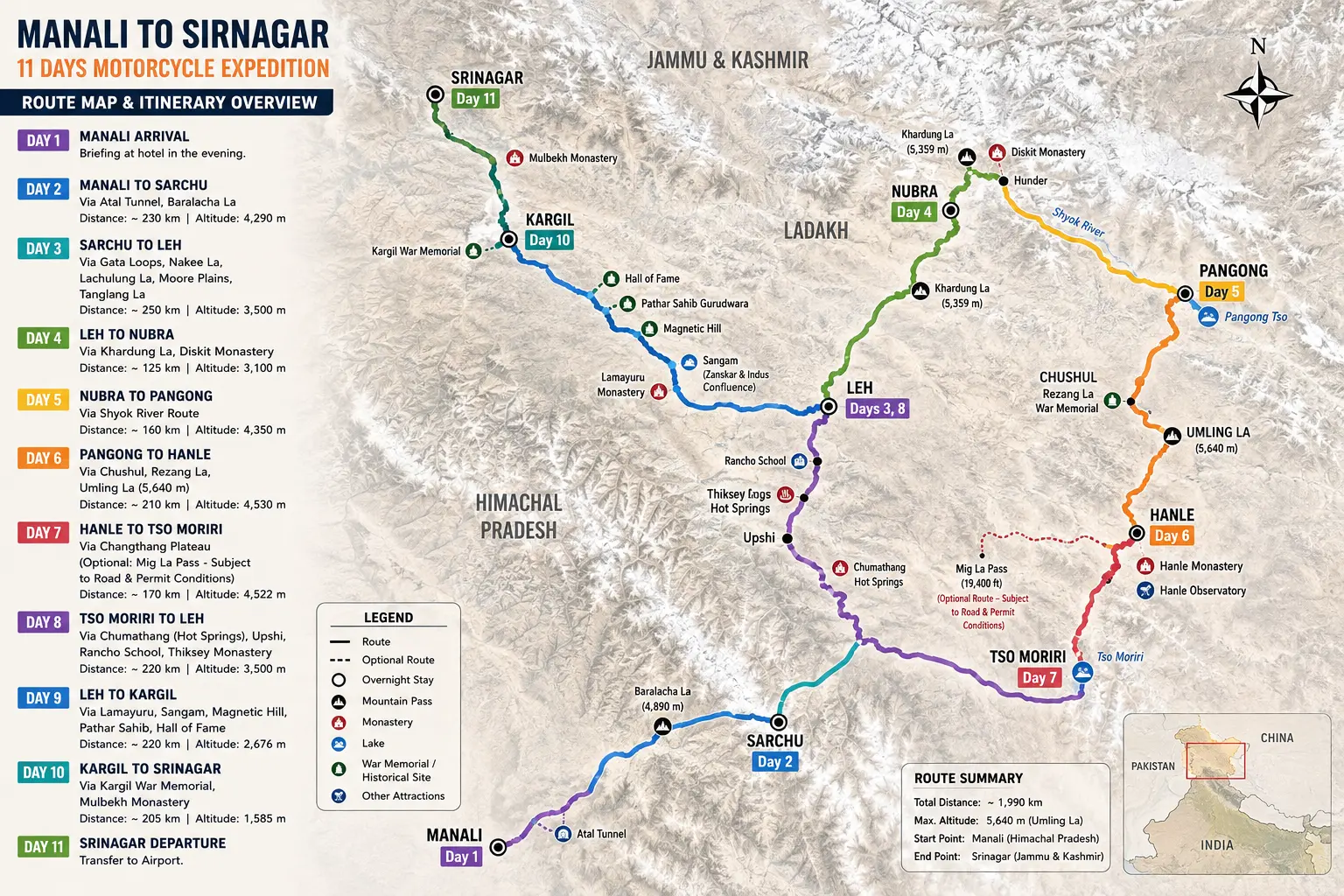
Reach Manali and check into the hotel. Take the rest of the day easy; walk around if you feel like it, or just rest. There's no riding today, so use the time to get used to the altitude and the mountain air before things get serious.
Manali is where this whole trip kicks off. From here the route runs through Sarchu and on to Leh, then deep into some of the toughest and most remote parts of Ladakh. Tomorrow the real riding starts, so today is really about getting your body and your head ready for it.
In the evening, the group meets at the hotel for a briefing. The team will go over riding rules, safety points, and what to expect once the altitude starts climbing. Worth paying attention here; the next several days bring long rides, steep altitude gain, and roads that can change conditions fast.
Breakfast, then straight onto the Manali–Leh Highway. You'll go through the Atal Tunnel first, and from there the road starts climbing toward Baralacha La. The landscape shifts fast on this stretch; green hills give way to bare rock and open, empty terrain within a few hours.
Baralacha La comes today. It's one of the higher passes on this stretch, so the climb takes a while and there's no rushing it. Once you're over the top, the road drops down toward Sarchu for a long, winding stretch. Altitude starts playing tricks around here too; a bit of a headache, maybe some breathlessness if you move too fast. Drink water even when you don't feel like it.
Sarchu shows up by evening. It sits close to 4,290 metres, right where Himachal Pradesh ends and Ladakh begins. Nothing fancy here, just tent camps for the night, no real hotels this far up the route. Get some sleep early; tomorrow's ride to Leh is long and takes up most of the day.
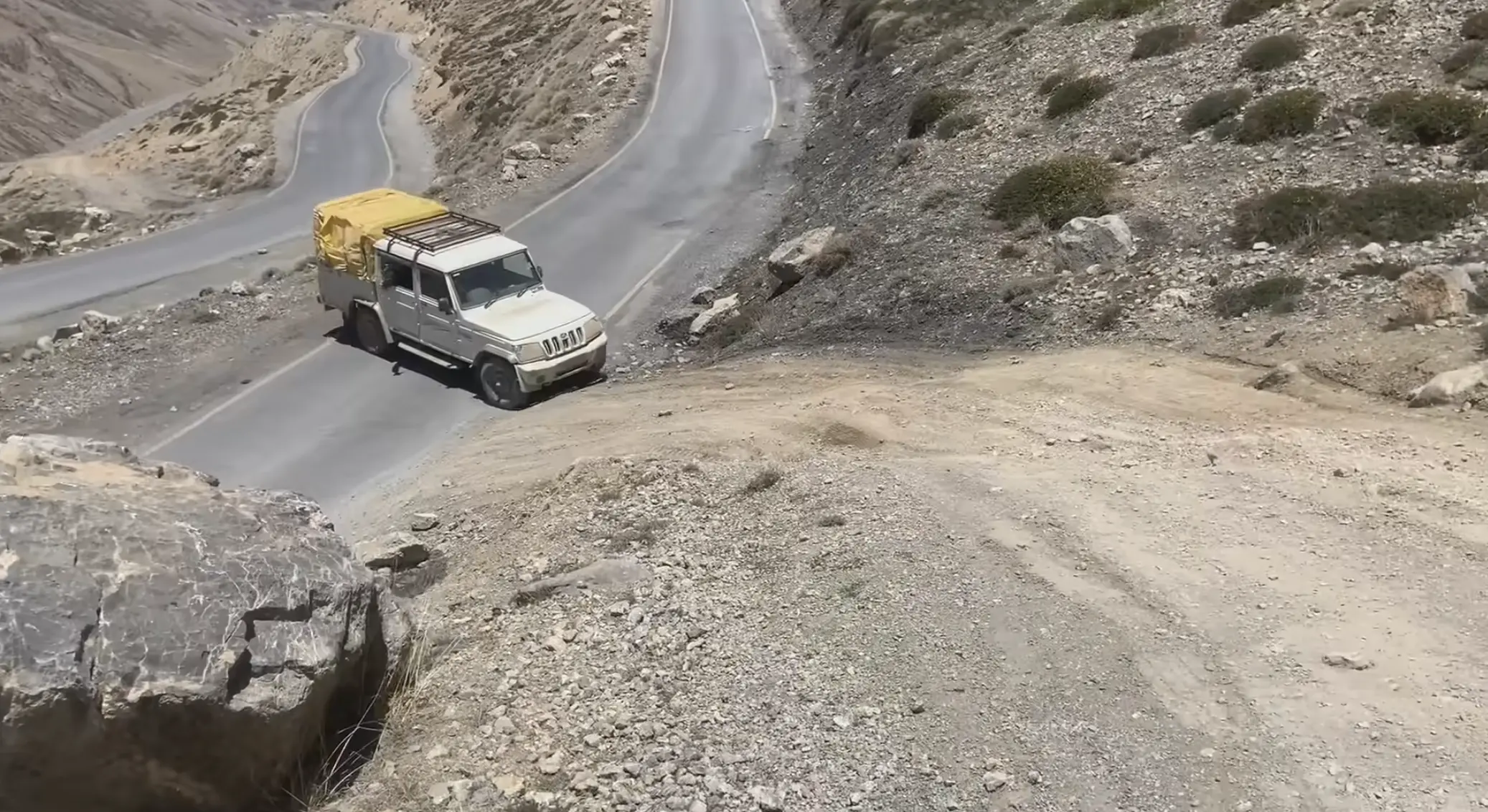
Leaving Sarchu, the road pushes deeper into Ladakh. First up are the Gata Loops; 21 hairpin bends stacked one after another, climbing the mountain fast. It's slow going and needs full attention, no room to zone out on this bit.
From there you cross Nakee La at around 4,740 metres, then Lachulung La just past 5,000 metres. Pang comes next, a small stop before the road opens up completely at Moore Plains; a nearly 50-km straight run that feels almost surreal after all those hairpins. Flat, wide, empty in every direction.
Tanglang La is the last big pass of the day, and after that it's a long stretch down toward Leh. Between the hairpins, the passes, and that stretch of plains, this is probably the toughest riding day of the whole trip. You'll reach Leh by evening; check into the hotel and rest up properly, because the next stretch of the expedition builds on this one.
Early start out of Leh, heading for Nubra Valley. First comes Khardung La; one of the highest passes on the whole route, and one every rider looks forward to. The climb up is steep, the air gets noticeably thinner, and the view from the top makes the effort worth it.
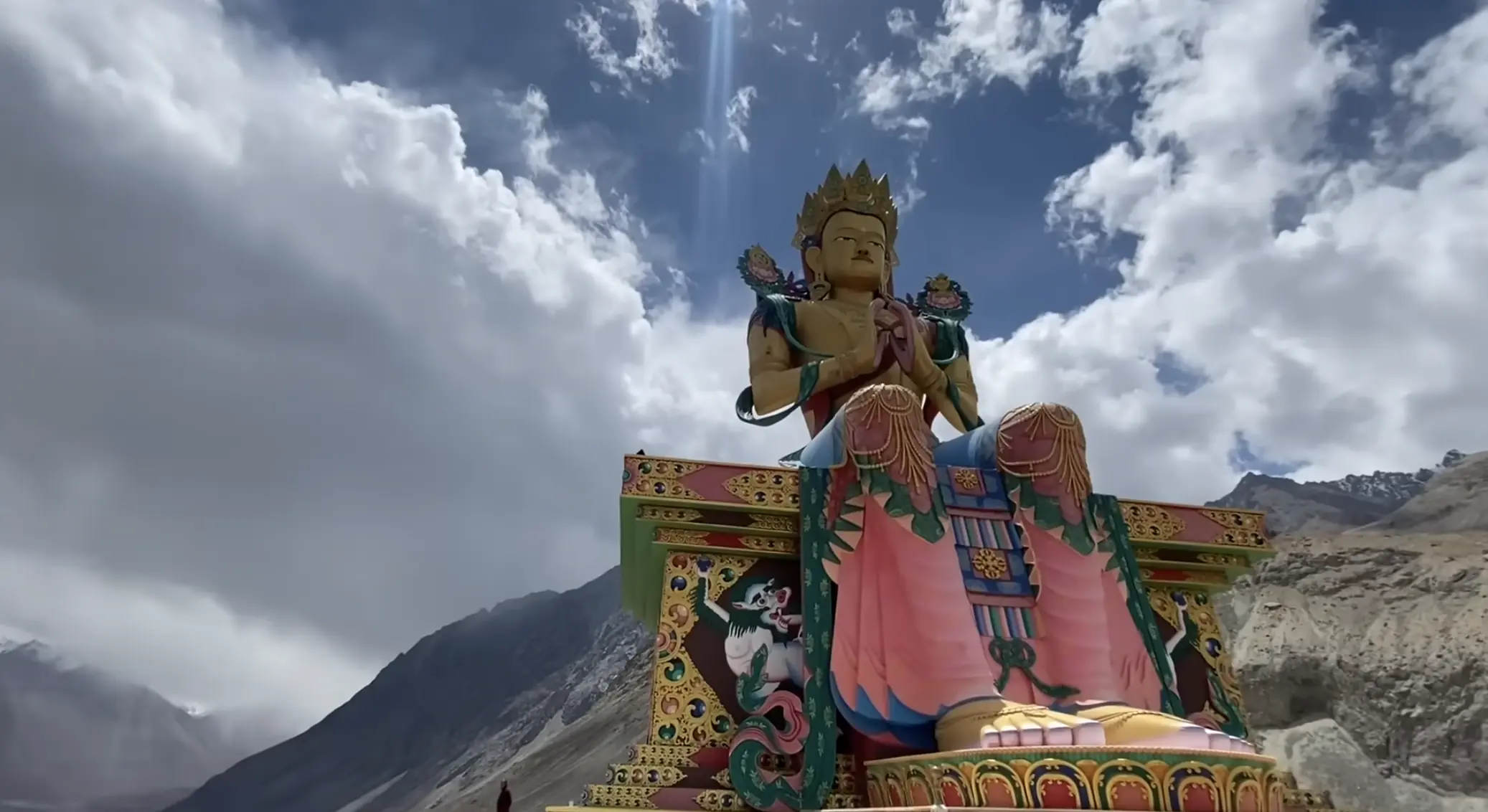
Once you're down the other side, the landscape opens into Nubra. There's a stop at Diskit Monastery on the way, perched above the valley with views worth the short walk up. From there it's on to Hunder, where you'll check in for the night.
Hunder feels like a different planet after two days of mountain passes; wide open valley, sand dunes, and Bactrian camels wandering around, the two-humped kind you won't see anywhere else in India. The rest of the day is free. Walk around, try a camel safari if you're up for it, or just sit and enjoy not being on the bike for a bit. Get some rest; Pangong is next.
Today's ride follows the Shyok River, out of Nubra and toward Pangong. It's a long day, mostly remote terrain with river views on one side and bare mountains on the other, so an early start helps; there's a lot of ground to cover, and you don't want to be rushing the last stretch in fading light.
Eventually the road brings you to Pangong Tso. You've probably seen photos of it already, but they don't really prepare you for it; the blue shifts as the light changes through the day, and with mountains on every side, it's hard not just to stop and stare for a while.
Check into a lakeside camp or cottage for the night. Take it easy this evening; walk along the water, sit and take in the view, whatever works. Get proper rest too, because tomorrow's ride to Hanle via Umling La is one of the hardest days of the whole trip.
This is the big one. From Pangong, the route drops into the Changthang region; remote doesn't even fully describe it, there's barely any sign of human life for long stretches. Lunch stop is at Rezang La War Memorial in Chushul, a quiet pause to take in what happened there before getting back on the bike.
Then comes Umling La. The road climbs to around 5,640 metres; the highest motorable road on earth, and you feel every bit of that altitude. Breathing gets harder, the bike feels different, everything takes more effort than usual. Getting to the top is one of those moments riders talk about long after the trip is over.
From there it's on to Hanle, a small, quiet village known mostly for its observatory and its dark, star-filled skies. After the intensity of Umling La, Hanle feels like a different world entirely; remote, silent, almost untouched. You'll stay in a guesthouse or homestay here for the night.
After breakfast, head out toward Tso Moriri. Before that, there's a stop at Hanle Monastery, and if permissions line up, a visit to the observatory too; a nice change of pace before another long day in the saddle.
From there the route runs through the Changthang Plateau, about as remote as this trip gets, barely any settlements for long stretches. The destination is Tso Moriri, an alpine lake sitting at around 4,522 metres. Quieter than Pangong, with mountains all around and the water shifting shades of blue through the day. Keep an eye out for wildlife too; this stretch sees more of it than most.
There's a possible detour today via Mig La Pass, close to 19,400 feet. Whether this happens depends entirely on road conditions and permits at the time; parts of it were under construction last we checked, and a few sections are steep enough to be genuinely tricky with a pillion rider. So treat it as a maybe, not a fixed part of the plan.
Back on the road early, heading toward Leh this time. Changthang's been remote for two straight days now; barely a shop, barely a signal. That starts changing today. Villages show up more often, so does traffic, so does the occasional dhaba.
Chumathang comes first. Hot springs here, if you want to stop and dip your feet for ten minutes; most people do. Lunch is at Upshi a bit further on. Neither stop takes long, but both help, because this is a long one on the bike otherwise.
Rancho School shows up near the end of the day (yes, that Rancho School), then Thiksey Monastery just before Leh itself. You'll roll into town by evening. Once the bike's parked, Leh's cafés and market street are worth a walk if your legs still work. It's the last real city stop before Kargil and Srinagar, so eat something that isn't instant noodles while you can.
Leh to Kargil today, and the whole feel of the ride shifts. No more high passes or empty lakes; this stretch is packed with stops instead, one after another.
First up, Magnetic Hill, where cars supposedly roll uphill on their own (it's an optical illusion, but fun to try anyway). Then Pathar Sahib Gurudwara, and a short visit to the Hall of Fame museum, which has some genuinely moving stuff from the '99 Kargil war. A bit further along is Sangam, where the Zanskar and Indus rivers meet in two completely different colours before mixing into one.
The real showstopper though is the Moon Land near Lamayuru. Grey, cratered, folded rock stretching out for miles; genuinely looks like you've landed somewhere off-planet. Hard to believe it's still Ladakh.
By the time all these stops are done, it's a fairly full day even before you factor in the actual riding. You'll reach Kargil by evening, grab dinner, and call it a night. Two states, dozens of passes, and thousands of kilometres in, and there's still one more push left; Srinagar's next.
Last big riding day. Before leaving Kargil, there's a stop at the War Memorial; worth the ten minutes, whatever your itinerary otherwise looks like. It's a sobering start to what's otherwise the final ride of the trip.
Mulbekh comes next, home to a massive rock-cut Chamba statue that's been standing there for centuries. Worth getting off the bike for a proper look, not just a drive-by photo.
From here the road runs on toward Srinagar, and somewhere along the way the terrain starts turning green again; actual trees, actual grass, after days of bare rock and gravel. It catches you off guard a little. You'll pull into Srinagar by evening and check into the hotel. Dinner tonight's probably going to come with a fair bit of looking back; Manali feels like a month ago at this point, not ten days. Sarchu, Umling La, Pangong at sunset, that stretch through the Moore Plains; it adds up to more than most people ride in a year.
Nothing riding-wise today, this one's just about getting home. Check out after breakfast whenever you're ready, no rush.
The team sorts out the airport transfer, so that part's taken care of. Take a moment before you head off, though; ten days ago this whole thing started in Manali, and since then it's covered Sarchu, Leh, Nubra, Pangong, Hanle, Tso Moriri, Kargil, and now Srinagar. That's a lot of road for one trip.
Whatever you take away from it; the cold at Umling La, the blue of Pangong at sunset, the silence out in Changthang, or just the feeling of getting the bike through all those passes in one piece; this is where it ends. Srinagar, with the whole Himalaya behind you.
Inclusions
- Royal Enfield Himalayan 411cc motorcycle for the expedition.
- Fuel as per the itinerary, covering the planned riding route.
- Mechanical support throughout the expedition for motorcycle-related assistance.
- Backup vehicle to provide additional support during the journey.
- Luggage vehicle for carrying luggage during the expedition.
- Experienced group leader to coordinate and lead the expedition.
- All required permits mentioned as part of the package.
- Accommodation on triple-sharing basis throughout the planned itinerary.
- Breakfast from Day 2 to Day 11.
- Dinner from Day 1 to Day 10.
- General first-aid support during the expedition.
- Oxygen cylinder available as part of the expedition’s support arrangements.
- Complimentary riding jackets and riding gear, with hand gloves provided on a rent-free basis.
- Helmets for both rider and pillion.
- Complimentary Volvo service as specified in the package.
Exclusions
- Adventure activities of any kind are not included in the package.
- Tips for the supporting team are not included.
- Refundable security deposit of ₹5,000 per bike for the motorcycle and riding gear.
- Medical and evacuation expenses are not included.
- Transportation outside the specified itinerary is excluded.
- Entry tickets and charges for video cameras, still cameras and similar activities are excluded.
- Personal expenses, including tips, telephone calls, laundry, alcohol, soft drinks, mineral water and other beverages.
- Any additional expenses arising from unforeseen circumstances, including landslides, roadblocks or bad weather.
- Travel insurance is not included.
- Anything not specifically mentioned under the inclusions.
- 5% GST is excluded from the stated package price.
Geography & Landscape
Watching the terrain change over these eleven days is half the reason to do this trip. It starts in the green hills around Manali and ends up somewhere that barely looks like it belongs on the same planet.
The first stretch out of Manali is all mountain passes, one after another; Baralacha La, the Gata Loops, Nakee La, Lachulung La, Moore Plains, Tanglang La. Sarchu sits at 4,290 metres and Lachulung La climbs past 5,000, so the altitude hits fast and doesn’t really let up.
Past Leh, things open up into Nubra Valley, where wide river flats suddenly give way to actual sand dunes; not what most people expect to find at 10,000 feet. Getting there means crossing Khardung La first, then dropping down into Hunder on the other side.
Pangong is its own thing entirely. At 4,350 metres, ringed by bare mountains, the water changes colour more or less by the hour. From here the route drops into Changthang; Chushul, Umling La, Hanle; which is about as remote and empty as landscapes get in this part of the world.
Tso Moriri, a bit further on at 4,522 metres, keeps that same quiet, wide-open feeling, with mountains on every side and more wildlife around than anywhere else on the trip. Chumathang’s hot springs break things up before the road turns back toward Leh.
Then comes the last shift in scenery; the grey, moon-like terrain near Lamayuru, and Sangam, where the Zanskar and Indus rivers meet in two different colours before mixing into one. From Kargil, it’s a final run into Srinagar, and by then you’ve ridden through pretty much every kind of landscape the Himalayas have to offer; passes, deserts, lakes, plateaus, and everything in between.
Best Time to Visit
This trip runs through the summer and early autumn window; the only stretch of the year when passes like Khardung La, Umling La, and the roads into Pangong, Hanle, and Tso Moriri are actually rideable. Outside this period, most of these routes are buried in snow and simply closed.
That said, even within this window, nothing’s guaranteed. This is high-altitude, remote terrain, and weather can flip fast; a landslide, an unexpected snowfall, a road washed out overnight. The trip terms are upfront about this: the plan can shift if conditions demand it.
There isn’t one single “best” month called out for this trip either. Really it comes down to what the roads and weather look like whenever you’re planning to go, and that’s something worth checking closer to your travel dates rather than locking in based on a general recommendation.
Things To Carry
- Insulated boots
- Trekking shoes with high soles
- Casual shoes
- Main, liner, spare and woollen socks
- Base-layer wicking underwear
- Insulating jacket, vest and pants
- Dry clothes for after riding
- Insulating hat, cap or headband
- Facemask or balaclava
- Goggles
- Gloves or mittens
- Waterproof over-mittens
- Raincoat compulsory
- Dry fruits
- Energy bars
- Energy beverages
- Undertaking certificate
- Identity card
- Rucksack bag — trolley bags are not allowed
Frequently Asked Questions
It’s an 11-day motorcycle trip through the Himalayas, starting in Manali and ending in Srinagar. You’ll ride through Sarchu, Leh, Nubra Valley, Pangong, Hanle, Tso Moriri, and Kargil along the way, hitting major points like Khardung La, Umling La, Diskit Monastery, Lamayuru, Magnetic Hill, the Zanskar–Indus confluence, and the Kargil War Memorial.
It’s not just about riding, either. There’s time built in for monasteries, small villages, high-altitude lakes, and just soaking in the region; the whole trip runs with proper expedition support behind it, not just a route on paper.
Baralacha La, Nakee La, Lachulung La, Tanglang La, Khardung La; these passes alone make up some of the hardest riding you’ll do anywhere. Add the Gata Loops and the 50-km straight run through Moore Plains, and you get a sense of how varied the terrain is.
The standout, though, is the Pangong-to-Hanle leg via Umling La, sitting at roughly 5,640 metres; the highest motorable road in the world. That day also runs through Changthang and stops at the Rezang La War Memorial in Chushul.
Beyond the passes, you’re also looking at Pangong Lake, Nubra Valley, Hunder, Hanle, Tso Moriri, Chumathang’s hot springs, Thiksey Monastery, Lamayuru, Magnetic Hill, Sangam, and the Kargil War Memorial. Riding, scenery, history; it’s all in there.
You get a Royal Enfield Himalayan 411cc, fuel as per the itinerary, and a full support setup; mechanic, backup vehicle, luggage vehicle, and a group leader coordinating the route.
Permits, accommodation (triple sharing), breakfast from Day 2 to Day 11, and dinner from Day 1 to Day 10 are all part of the package, so you’re not arranging any of that yourself.
On the gear side: first aid, an oxygen cylinder, riding jackets, gloves and helmets for rider and pillion (rent-free), plus a complimentary Volvo transfer.
Stays are on triple sharing throughout. The properties listed are from 2025; covering Srinagar, Kargil, Leh, Nubra, Pangong, Hanle, Sarchu, and Manali; and 2026 stays should be the same or very similar.
Meals: breakfast Day 2 through Day 11, dinner Day 1 through Day 10.
The type of stay changes with the location; hotels in Leh and Kargil, camps around Pangong, guesthouses or homestays in Hanle. Expect some variation night to night; that’s part of doing a trip like this.
Four options here: ₹49,999 per person as a Solo Rider, ₹39,999 as a Dual Rider, ₹29,999 if you’re bringing your own vehicle, and ₹34,999 for the Journey in Car/Tempo option.
Booking amount is ₹5,000, non-refundable. The remaining 50% is due within 30 days of booking, and the rest is settled on Day 1 of the trip. On top of the bike, there’s a ₹5,000 refundable security deposit per bike for the vehicle and gear. Note that 5% GST isn’t included in these prices; factor that in separately.
The support system covers first aid, an oxygen cylinder, a mechanic, backup and luggage vehicles, and a group leader throughout the trip.
That said, altitude here is no joke; Sarchu sits at 4,290m, Pangong at 4,350m, Tso Moriri at 4,522m, and Umling La at 5,640m. Conditions shift fast at this height.
One thing to be clear on: this support isn’t medical insurance or an evacuation guarantee. Medical costs and evacuation expenses are excluded, and so is travel insurance; worth sorting that out separately before you go.
Yes, and it happens more often than you’d think at this altitude. Snowfall or other natural events can force a change in plan, and costs from landslides, roadblocks, or bad weather aren’t covered by the package.
Mig La Pass, in particular, is a maybe, not a guarantee; it depends on permits and road conditions at the time. Parts of it were under construction and quite steep the last time it was checked.
If the trip has to be extended for reasons outside anyone’s control, extra costs fall on the traveller. Delays from traffic, weather, or transport issues aren’t something the organisers can be held responsible for either.
Adventure activities, tips, medical/evacuation costs, transport outside the itinerary, entry tickets, camera fees, and personal expenses; phone calls, laundry, alcohol, soft drinks, bottled water, that sort of thing.
Also excluded: costs from landslides, roadblocks, bad weather, travel insurance, and the 5% GST mentioned earlier.
A couple of things worth flagging specifically; if your bike needs to be towed after a drop, that cost isn’t covered, and damaged campsite property (tents, mattresses, pillows) gets charged at full MRP.
Cold-weather gear is non-negotiable: thermal base layers, insulated jackets and pants, something dry to change into after riding, a warm hat or headband, a balaclava, goggles, gloves or mittens, waterproof over-mittens, and a raincoat; that last one isn’t optional.
For your feet: insulated boots, sturdy trekking shoes, a pair of casual shoes, and several types of socks; regular, liner, spare, and wool. Pack some dry fruits, energy bars, and an electrolyte drink or two as well.
Carry your ID and the signed undertaking certificate. And skip the trolley bag; it’s rucksacks only here, with a ₹500-per-kg penalty if you show up with wheels instead of straps.
The ₹5,000 booking amount doesn’t come back once paid, and cancellations need to be in writing. If Wander To Miles cancels the trip due to weather, safety, or government restrictions, you’ll be offered a reschedule, and any refund due gets processed in 7–14 working days.
Keep in mind you’re signing up for a trip through genuinely unpredictable terrain; the organisers aren’t liable for injury, illness, or loss of personal belongings, and once you’re off camp premises, your whereabouts are your own responsibility.
A few ground rules round it out: no weapons, fireworks, or banned substances; bonfires and music nights depend on what the local camp or hotel allows; seating on transport is first-come, first-served; and Volvo transfers are run by a third party, so any issues there sit with that supplier, not the expedition team.
Food
Meals are covered for most of the trip; breakfast from Day 2 right through Day 11, and dinner from Day 1 through Day 10. That’s your main meals sorted for the whole journey.
Worth packing your own snacks too, especially for the long riding days. Dry fruits, energy bars, an electrolyte drink or two; small things, but they help when you’re hours into a ride at altitude and lunch is still a while away.
Bottled water, soft drinks, and any other food or drinks outside the set meals come out of your own pocket; these fall under personal expenses, not the package.
One honest gap here: the itinerary doesn’t spell out an actual menu, meal timings, or whether vegetarian options are guaranteed at every stop. So it’s worth checking directly with the operator before you go if that’s something you need confirmed rather than assuming it’s covered.
Trek Fitness
There’s no formal fitness test or trekking qualification attached to this trip; it’s a motorcycle expedition, not a trekking programme, so it isn’t structured around that kind of physical screening.
That doesn’t mean it’s easy, though. You’re riding at serious altitude for most of the trip; Sarchu at 4,290m, Pangong around 4,350m, Tso Moriri near 4,522m, and Umling La touching 5,640m. Add in stretches like the Gata Loops, Nakee La, Lachulung La, and Khardung La, and it’s clear this isn’t a casual ride. First aid and an oxygen cylinder are part of the support setup for exactly this reason.
The packing list gives a decent hint at what to expect too; insulated clothing, proper boots, gloves, goggles, waterproof mittens, a raincoat you’re required to carry. That’s cold-weather, high-altitude gear, not something you’d need for an easy weekend ride.
One thing worth being straight about: there’s no stated minimum age, no medical certificate requirement, no fixed endurance benchmark or training plan mentioned anywhere in the trip details. So none of that should be presented as an official requirement unless the organiser confirms it directly; better to check with them than to assume.
Safety
The expedition includes mechanical support, a backup vehicle, luggage vehicle, group leader, general first aid and an oxygen cylinder to support riders throughout the journey. All required permits are also included in the package.
The itinerary involves significant high-altitude riding, including Sarchu at 4,290 m, Pangong at approximately 4,350 m, Tso Moriri at around 4,522 m and Umling La at approximately 5,640 m. Riders should be prepared for demanding mountain conditions and changing terrain.
The route may change because of snowfall, landslides, roadblocks, bad weather or other natural circumstances. The optional Mig La section is also subject to road conditions and permits, with the document noting steep and under-construction sections.
Medical and evacuation expenses are not included, and travel insurance is also excluded. The organisers state that they are not responsible for injuries, illness, loss or theft of personal property during the tour.
Weather & Temperature Guide
There’s no exact temperature chart or forecast built into the trip details; no promise of “it’ll be X degrees on Day 6.” What is clear is that you’re riding through high-altitude Himalayan terrain where weather can turn on you with little warning.
You’re looking at some serious elevations here; Sarchu at 4,290m, Pangong around 4,350m, Tso Moriri near 4,522m, and Umling La up at 5,640m. At that height, cold isn’t occasional, it’s the default, and conditions can shift within hours.
The trip terms are direct about this: snowfall, landslides, roadblocks, and bad weather can all force a change of plan. The Mig La detour, in particular, only happens if road conditions and permits cooperate on the day.
Given all that, the packing list leans heavily toward cold-weather gear; insulated boots, layered clothing, dry spares, a warm hat, a balaclava, goggles, gloves, waterproof over-mittens, and a raincoat that isn’t optional.
One honest note: since there’s no specific temperature data provided for each location, it’s better not to quote exact numbers as if they’re guaranteed; pack for genuinely cold, unpredictable mountain weather rather than a specific forecast.
Map
Why Choose Us?
Complete Expedition Support
You ride a Royal Enfield Himalayan 411cc, and everything else is handled; fuel, a mechanic on call, a backup vehicle, a luggage vehicle, and a group leader who’s done this route before.
High-Altitude Adventure
Khardung La, Pangong, Hanle, Tso Moriri, and Umling La; the last one takes you up to roughly 5,640 metres, the highest motorable road anywhere in the world.
Safety-Focused Support
First aid, an oxygen cylinder, mechanical backup, a support vehicle, and every permit sorted in advance. At this altitude, that kind of backup actually matters.
Accommodation & Meals Included
Triple-sharing stays, breakfast from Day 2 to 11, dinner from Day 1 to 10. One less thing to plan around while you’re focused on the ride.
Adventure Beyond Riding
Nubra, Pangong, Hanle, Tso Moriri, old monasteries, war memorials, Lamayuru, Magnetic Hill, the Zanskar–Indus meeting point; there’s more to this trip than just covering distance.
Organised & Well-Planned Journey
Permits, group leadership, meals, stays, riding support; it’s all worked out ahead of time. All you need to think about is the road in front of you.